


How Eagle 3.1 Changes Throughput and Cost in vLLM Serving
Hitesh Sondhi · July 25, 2026 · 6 min read
We’ve all seen this movie: the demo is fast, the benchmark chart looks heroic, and then production shows up with real traffic, mixed prompt lengths, and users who absolutely refuse to arrive one at a time. Suddenly your “cheap” LLM endpoint is burning money and your p95 latency looks like a hostage situation.
That’s why Eagle 3.1 in vLLM matters.
Not because speculative decoding is new. It isn’t. It matters because serving wins only count when they survive contact with a real vLLM stack—continuous batching, scheduler behavior, memory pressure, and all the ugly details people skip in launch threads. The interesting part of eagle 3.1: collaboration between the EAGLE team, vLLM team, and TorchSpec team is that this wasn’t just an algorithm paper victory lap. It was built as open-source serving infrastructure work, and that’s the part builders should care about most vLLM.
Key Takeaways
- Eagle 3.1 is about getting more accepted tokens per expensive target-model step, which can improve throughput and reduce cost in vLLM-based serving vLLM
- The real value isn’t “faster tokens” in isolation; it’s better economics under production concurrency
- Open-source collaboration matters here because speculative decoding is notoriously easy to benchmark badly and hard to integrate well
- If you run latency-sensitive APIs, voice systems, or agent backends, Eagle 3.1 is worth testing before you buy more GPUs
- If your workload is tiny-batch, badly cached, or dominated by long prefills, don’t expect magic. Physics is still employed.
Why this release is more important than it sounds
Most teams talk about inference speed like it’s a car ad.
Zero to sixty. Tokens per second. Big number. Nice chart.
But if you’re serving real applications, what you actually pay for is GPU time per useful output token under concurrency. That’s a much meaner metric. It punishes waste, scheduler stalls, and every extra forward pass your target model has to do.
Eagle 3.1 attacks that problem through speculative decoding in vLLM, where a smaller drafting path proposes tokens and the larger model verifies them, so the system can accept multiple tokens per target-model step when things line up vLLM. When it works, it’s like sending a prep cook ahead of the head chef. The chef still signs off, but dinner gets out faster.
That’s the theory.
The reason we care is the implementation.
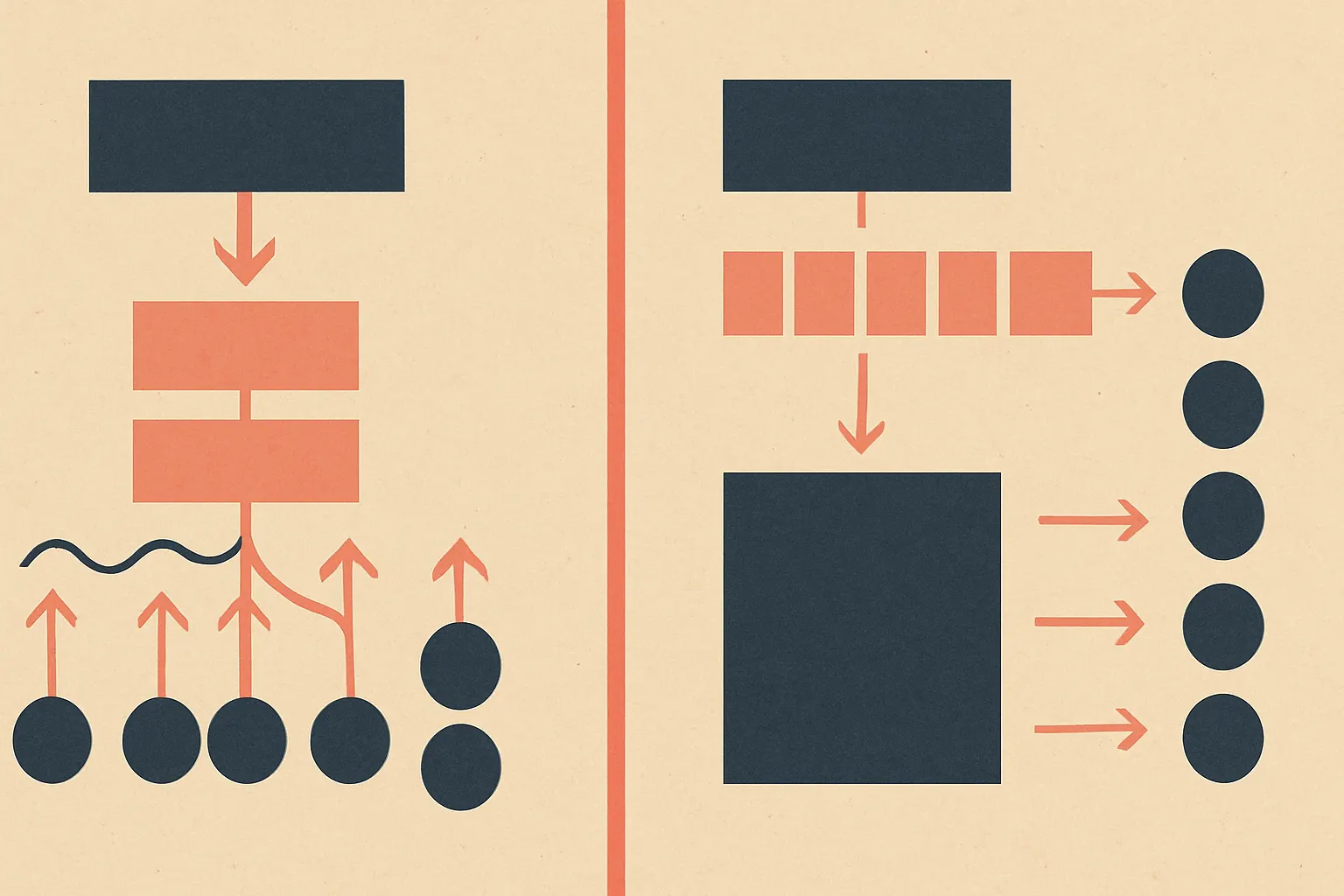
Here’s a simple way to think about the serving path:
flowchart LR
  A[User Request] --> B[vLLM Scheduler]
  B --> C[Eagle 3.1 Draft Step]
  C --> D[Target Model Verification]
  D --> E[Accepted Multiple Tokens]
  D --> F[Rejected Tokens Recomputed]
  E --> G[Faster Output Lower GPU Cost]
  F --> G
If acceptance is high enough, you get more output from each expensive verification step. If acceptance is bad, you’ve built yourself a very clever tax.
What changed for operators using vLLM
The vLLM announcement frames Eagle 3.1 as a joint effort across the EAGLE, vLLM, and TorchSpec teams, which is exactly how this kind of thing should happen vLLM. We’re opinionated about this: algorithm advances without serving-engine integration are often academic cosplay.
Harsh? Maybe. Still true.
The practical implication is that Eagle 3.1 isn’t just “another decoding trick.” It’s a serving feature you can evaluate inside the stack many teams already run. That lowers the adoption cost dramatically. You don’t need a science project. You need a benchmark plan.
And this is where teams usually fool themselves.
They benchmark with short prompts, clean outputs, no tool calls, and concurrency that looks nothing like production. Then they announce victory and spend the next month explaining why customer-facing latency didn’t move. We’ve seen versions of this mistake in enough AI deployments to call it what it is: bad engineering theater.
Where Eagle 3.1 should pay off first
If you run high-volume generation APIs, agent backends, or voice AI systems where every chunk of latency compounds into a worse user experience, Eagle 3.1 is promising because it targets the decode path—the part many teams pay for over and over again.
That makes it especially relevant for:
- chat endpoints with sustained output lengths
- multi-tenant assistant backends built on AI agents
- custom deployments where you’re squeezing more life out of fixed GPU budgets via custom models
- cost-sensitive production stacks where shaving inference waste matters more than chasing benchmark vanity
If you’re doing on-prem or edge-style optimization work, this release is also a good reminder that serving efficiency isn’t only a cloud problem. We think about this a lot in on-device AI and products like RunHotel: lower compute per useful token often means better responsiveness, lower thermal pain, or both.
Different hardware. Same bill from physics.
The hot take: throughput gains are only half the story
Here’s the part people underplay: throughput improvements are really cost-structure improvements.
If Eagle 3.1 lets vLLM serve more useful tokens with the same hardware budget, you don’t just get faster responses. You get options. You can lower cost per request, absorb higher concurrency, or spend the savings on better models where quality actually moves the business.
That’s a much better story than “our tokens/sec number got bigger.”
If you want to sanity-check whether serving optimizations like this are worth the engineering time, run the math against your own traffic with an AI cost estimator. If the numbers are ugly, don’t buy more GPUs first. Profile the stack first.
Then decide.
What you should do this week
Read the vLLM release notes carefully and test Eagle 3.1 against your workload, not someone else’s benchmark vLLM. Measure p50, p95, throughput under concurrency, acceptance behavior, and cost per completed response. Include long prompts, messy prompts, and the weird traffic your PM swears is “edge case.”
That’s the test that matters.
If you want help evaluating whether Eagle 3.1 belongs in your serving stack—or whether you should be fixing routing, caching, model choice, or agent design first—talk to us through AI consulting or contact us.
Because the fastest way to waste money in AI is still the old-fashioned way: benchmarking the wrong thing and calling it strategy.