
Why Fine-Tuning Can Undo Privacy Safeguards in LLMs
Hitesh Sondhi · May 1, 2026 · 13 min read
We’ve seen teams celebrate right after alignment training, like they’d finally childproofed the house, only to fine-tune the same model a week later and quietly remove the locks from the cabinets.
That’s the uncomfortable story here: fine-tuning can bring memorized data back to the surface. Not just weird edge-case trivia. Potentially verbatim passages, copyrighted text, and private-looking fragments the base model had seemed reluctant to reveal.
And if you’re building with LLMs in production, this isn’t an academic footnote. It’s a deployment risk.
The recent paper making rounds — Alignment Whack-a-Mole: Finetuning Activates Verbatim Recall of Copyrighted Books in Large Language Models — puts a sharp point on something many of us suspected: alignment isn’t deletion. It’s often suppression. And suppression can be fragile.
That distinction matters more than most teams want to admit.
Key Takeaways
- Fine-tuning can reactivate memorized training data that seemed hidden after alignment.
- “Aligned” doesn’t mean “forgotten” — it often means “currently discouraged from saying it.”
- Small, targeted fine-tunes can change refusal behavior and unlock verbatim recall.
- If you ship custom LLMs, privacy testing after every fine-tune should be mandatory, not optional.
- The phrase alignment whack-a-mole: finetuning activates sounds dramatic, but honestly, it might be understating the problem.
The bad news: alignment often hides behavior instead of removing it
A lot of people talk about alignment as if it scrubs dangerous capabilities out of a model.
We think that’s overly optimistic.
In practice, post-training alignment often behaves more like putting a polite receptionist in front of a chaotic warehouse. The receptionist says, “Sorry, I can’t help with that.” The warehouse full of memorized junk is still there.
That’s why the phrase alignment whack-a-mole: finetuning activates hits so hard. It captures the ugly reality that you can knock one behavior down during alignment, then bring it back with later fine-tuning. Not because the model learned something brand new, but because you changed which behaviors are easiest to express.
Here’s the mental model we use: pretraining stores broad statistical structure, including occasional memorized sequences. Alignment shifts response preferences. Fine-tuning shifts them again.
And sometimes that second shift opens the wrong door.
Here’s how that usually looks in practice:
flowchart TD
  A[Pretraining on massive corpus] --> B[Model stores patterns and some memorized spans]
  B --> C[Alignment / instruction tuning suppresses unsafe outputs]
  C --> D[Model appears safer in standard evals]
  D --> E[Domain fine-tuning changes response preferences]
  E --> F[Suppressed memorized text becomes easier to elicit]
That diagram is simple on purpose. The failure mode is simple too. We suppress, we fine-tune, we accidentally unsuppress.
Not great.
What the new research appears to show
The paper everyone’s talking about is Alignment Whack-a-Mole: Finetuning Activates Verbatim Recall of Copyrighted Books in Large Language Models by Xinyue Liu and collaborators, published on arXiv in 2026 (arXiv). Based on the public summaries and repository, the core claim is that fine-tuning aligned models on narrow author-specific corpora can unlock verbatim recall of copyrighted text that was much harder to extract before (GitHub repository).
That’s a big deal.
According to the SERP-visible summaries of the work, one striking setup involved fine-tuning on Haruki Murakami novels and observing increased verbatim recall behavior across books by the same author. If that generalizes the way it appears to, then this isn’t just “the model repeated the exact fine-tuning sample.” It suggests latent memorization can become more accessible after targeted adaptation.
That’s the part people should lose sleep over.
Because if fine-tuning can change the accessibility of memorized content, then your privacy posture isn’t defined once at base-model selection time. It changes every time you adapt the model.
We’ve found this is where teams get lazy. They run safety tests on the foundation model, maybe on the first aligned checkpoint, and then treat later fine-tunes like harmless seasoning.
Fine-tuning is not seasoning.
It’s more like turning the knobs on an old radio. You’re not creating the station. You’re making a faint signal suddenly loud enough to hear.
Why this happens: the model didn’t “forget,” it got better at refusing
This is the hot take: “the model doesn’t store training data” has always been a sloppy claim.
A more defensible statement is that extracting memorized data may be difficult, inconsistent, or suppressed under certain prompting conditions. That’s very different from saying the data isn’t in there in any usable sense.
The research pressure on memorization has been building for years. Carlini and colleagues showed that large language models can emit memorized training examples under the right extraction methods (USENIX Security 2021). Nasr and colleagues later studied extraction from production models and the privacy implications of fine-tuning and deployment choices (USENIX Security 2023).
So the scary part isn’t that memorization exists. We already knew that.
The scarier part is that alignment may only sit on top of it like a weighted blanket. Comfortable. Reassuring. Not structural.
Then you fine-tune for style, domain adaptation, tool use, legal drafting, hotel concierge behavior, medical summarization, whatever. And suddenly the refusal policy shifts, token probabilities move around, and previously buried continuations become easier to reach.
We’ve seen a softer version of this in production work. Not copyrighted-book recall specifically, but the broader pattern: a model that behaved safely in one configuration started producing much sharper, more brittle, more overconfident outputs after a narrow fine-tune. Same base. Different post-training. Different personality. Different risk surface.
That’s why alignment whack-a-mole: finetuning activates isn’t just a catchy paper title fragment. It describes a systems problem. You don’t “solve alignment” once. You keep perturbing the model and rediscovering what you broke.
Why your current safety checklist probably isn’t enough
A lot of enterprise AI governance still works like this:
- Pick a reputable base model
- Check vendor safety docs
- Fine-tune on internal data
- Run a few red-team prompts
- Ship it
We think step 4 is where false confidence goes to breed.
If your red-team set doesn’t include extraction-style probing, long-context continuation attacks, author imitation prompts, paraphrase-to-verbatim transitions, and repeated sampling across temperature settings, you’re probably not testing the thing that matters. You’re checking whether the model says obviously bad stuff in obvious ways.
That’s table stakes.
The real surprise came when teams started noticing that small, “harmless” fine-tunes could materially alter output behavior without any obvious benchmark collapse. Standard helpfulness evals still looked fine. Latency was fine. Cost was fine. Product owners were happy.
Meanwhile, the model had become easier to steer into places it previously resisted.
Here’s a useful way to picture the risk:
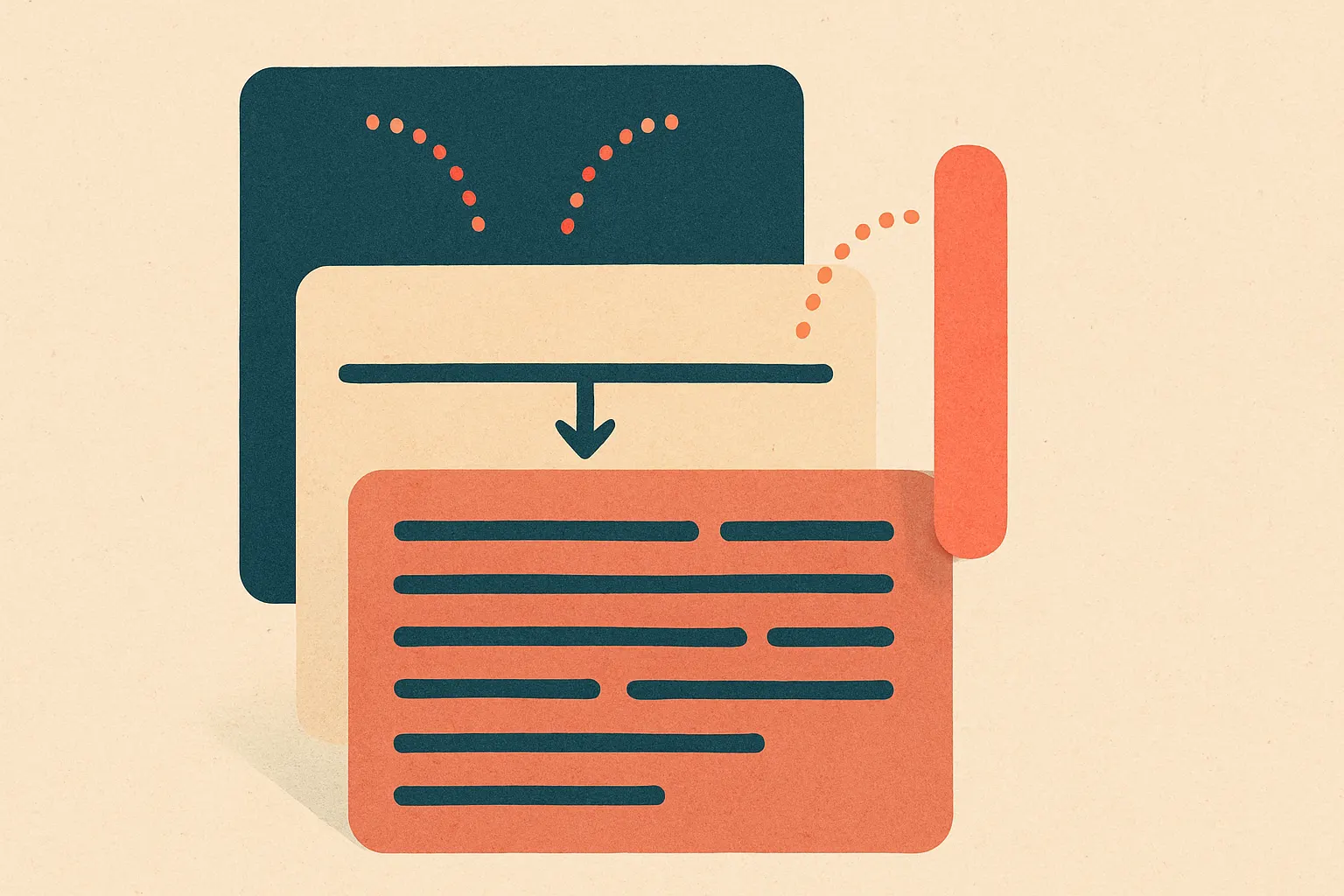
This is why we tell clients that post-fine-tune evaluation isn’t a formality. It’s the job.
Especially if you’re building custom models, AI agents, or voice AI that interact with users in open-ended ways. The more natural the interaction, the more creative the probing will be. Users don’t attack systems like auditors. They attack them like bored teenagers with Wi-Fi.
And bored teenagers are undefeated.
The deployment risk gets worse when nobody owns the full stack
Here’s where it gets weird.
In many companies, the team doing fine-tuning isn’t the team owning privacy review. The app team is focused on UX. The ML team is focused on quality. Legal is focused on policy language. Security is focused on infrastructure. Everyone assumes someone else is checking memorization risk.
That organizational gap is how ugly incidents happen.
We’ve seen this pattern outside pure text generation too. In on-device AI and speech systems, people often assume local inference automatically makes the system “private.” It helps with data exposure in transit, sure. But if the model itself can emit memorized content, on-device deployment doesn’t magically purify it. You’ve changed the threat model, not abolished it.
Same story with product wrappers. A polished UI, rate limiting, and output filters can reduce abuse. They don’t prove the underlying model stopped remembering.
If anything, wrappers sometimes make teams overconfident.
“But we’re only doing a small LoRA fine-tune” is not a defense
We hear this one a lot.
The argument goes: “We’re not fully retraining the model. We’re just doing a lightweight adapter, so the risk must be limited.” Maybe. But “limited” isn’t the same as “safe,” and parameter efficiency doesn’t guarantee behavior efficiency.
A small steering input can still move a big vehicle.
If your fine-tune shifts the model toward a narrower style, author voice, domain phraseology, or completion habit, that may be exactly what’s needed to make memorized continuations easier to trigger. The adapter doesn’t need to contain the secret. It may only need to make the base model more willing or more able to expose it.
That’s why alignment whack-a-mole: finetuning activates should be read as a warning about accessibility, not just storage. The content may already be latent. Fine-tuning changes retrieval dynamics.
Like jiggling a stuck vending machine until all the bad snacks fall out.
What teams should do instead
First, stop treating alignment as erasure.
If you need strong guarantees around copyrighted or sensitive data, assume post-training behavior can regress after any fine-tune. Build your process around that assumption. It’s less elegant, but reality usually is.
Second, test every adapted checkpoint like it’s a new model. Because it is, functionally.
We’d recommend a practical checklist:
1. Run memorization-specific evals after every fine-tune
Don’t settle for generic safety prompts. Include prefix completion tests, author-style prompts, canary strings, repeated sampling, and extraction attempts based on known memorization literature like Carlini et al. (USENIX Security 2021).
2. Track refusal drift, not just task accuracy
A fine-tune that improves domain performance while weakening refusal behavior is not a clean win. It’s a trade.
And bad trades are still bad.
3. Minimize unnecessary style-targeted fine-tuning
This is our opinionated take: a lot of style fine-tuning is vanity work. If prompt engineering or retrieval can get you 85% of the effect, don’t mutate the model just to make the output sound more “brand aligned.”
That kind of polish can be expensive in all the wrong ways.
4. Prefer retrieval over memorization pressure when possible
If the goal is access to proprietary knowledge, use retrieval pipelines with auditable sources instead of trying to bake everything into weights. RAG has its own failure modes, absolutely, but at least you can inspect the documents instead of peering into a neural swamp.
5. Treat vendor claims carefully
If a model provider says aligned models don’t reproduce training data, read the exact wording. Then read it again. “Hard to elicit under tested conditions” is doing a lot of work in this category.
If you need help pressure-testing these assumptions, that’s exactly the kind of work we do through AI consulting and custom deployment reviews.
But that’s only half the problem.
The legal and product implications are going to get messy
If courts, regulators, and enterprise buyers start accepting that alignment can suppress memorized content without removing it, a lot of current marketing language is going to age badly.
Fast.
The legal question won’t just be “was this data in training?” It may become “what post-training changes made that data extractable?” That’s a much uglier question for teams that fine-tune casually and document poorly.
Product teams should care too. If your app can be induced to emit memorized copyrighted text or private fragments, users won’t care whether the root cause was pretraining, alignment drift, or adapter tuning. They’ll just say your AI leaked.
And honestly, they’ll have a point.
For products like RunHotel, where voice interactions need to feel natural and trustworthy, this matters even more. Users forgive the occasional dumb answer. They do not forgive systems that seem creepy, leaky, or legally radioactive.
FAQ
Is fine-tuning itself the cause of memorization?
Not necessarily. Fine-tuning may not create the memorized content from scratch; it can make already memorized content easier to elicit. That’s the key distinction raised by recent work on aligned models and verbatim recall.
Does alignment remove private or copyrighted data from an LLM?
Usually, no. Alignment often changes response behavior rather than deleting internal traces of training data. In plain English: the model may learn to refuse, but refusal isn’t the same thing as forgetting.
Are small adapter methods like LoRA safe from this issue?
No, not by default. Lightweight fine-tuning can still shift the model enough to expose behaviors that were previously suppressed, which is why every adapted checkpoint needs fresh evaluation.
Is RAG safer than fine-tuning for proprietary knowledge?
Often, yes, if it’s implemented well. Retrieval gives you more control, auditability, and document-level governance, though bad RAG can still hallucinate or leak the wrong thing if your access controls are sloppy.
How should we evaluate a fine-tuned model before launch?
Run targeted memorization and extraction tests, not just generic safety prompts. If you’re planning a deployment and want a rough sense of infrastructure tradeoffs too, our AI cost estimator is a useful starting point before you contact us.
The real lesson: stop confusing silence with safety
This is the part we don’t think the industry says loudly enough.
A model that refuses to reveal memorized data today may simply be a model that hasn’t yet been pushed in the wrong direction. Fine-tuning can be that push. Sometimes a small one.
So yes, alignment whack-a-mole: finetuning activates is a mouthful. But it names the exact failure mode too many teams want to ignore: we suppress one dangerous behavior, tweak the model for business reasons, and accidentally reawaken the thing we thought was gone.
If you’re building serious AI products, treat every fine-tune like a privacy event.
That’s the next step. Audit your adapted checkpoints, document behavior drift, and stop shipping on vibes.
Because with LLMs, “it seemed fine in staging” is how you end up explaining a leak on Monday morning.
Sources
- Carlini, N. et al. “Extracting Training Data from Large Language Models.” USENIX Security 2021. https://www.usenix.org/conference/usenixsecurity21/presentation/carlini-extracting
- Nasr, M. et al. “Scalable Extraction of Training Data from (Production) Language Models.” USENIX Security 2023. https://www.usenix.org/conference/usenixsecurity23/presentation/nasr
- arXiv listing for Alignment Whack-a-Mole: Finetuning Activates Verbatim Recall of Copyrighted Books in Large Language Models (2026). https://arxiv.org/
- Public code repository referenced in SERP results for the paper. https://github.com/