


Cutting Memory Overhead: When eidetic works pro is Worth Buying
Hitesh Sondhi · August 12, 2026 · 9 min read
Most teams have a coding agent that forgets every architectural decision the moment you close the session. Teams have been pasting context files into Claude and Cursor for months, and the repetition is eating real engineering hours. What matters isn't whether agents need persistent memory. Deciding whether to build that memory layer yourself or wire in something that already exists is the real question.
Eidetic Works launched its Pro tier recently, adding an always-on daemon and multi-surface memory across AI coding tools. Its pitch is total recall: it watches every AI tool you use, remembers decisions across sessions, and surfaces them when relevant. Source: dev.to
Teams building production agents face a real architectural question here. Should persistent memory be infrastructure you own and operate, or a service you integrate? Answers depend on API contracts, data governance requirements, and how much latency you can tolerate between your agent and its memory store.
What Eidetic Works Pro Actually Does
Running locally as a daemon, Eidetic Works Pro observes interactions across Claude, Cursor, Windsurf, and other AI coding surfaces, then persists decisions, code patterns, and context into a local memory store. Upgrading to Pro adds the always-on daemon so memory capture doesn't depend on an active IDE session, plus multi-surface support so memory transfers between tools. Source: dev.to
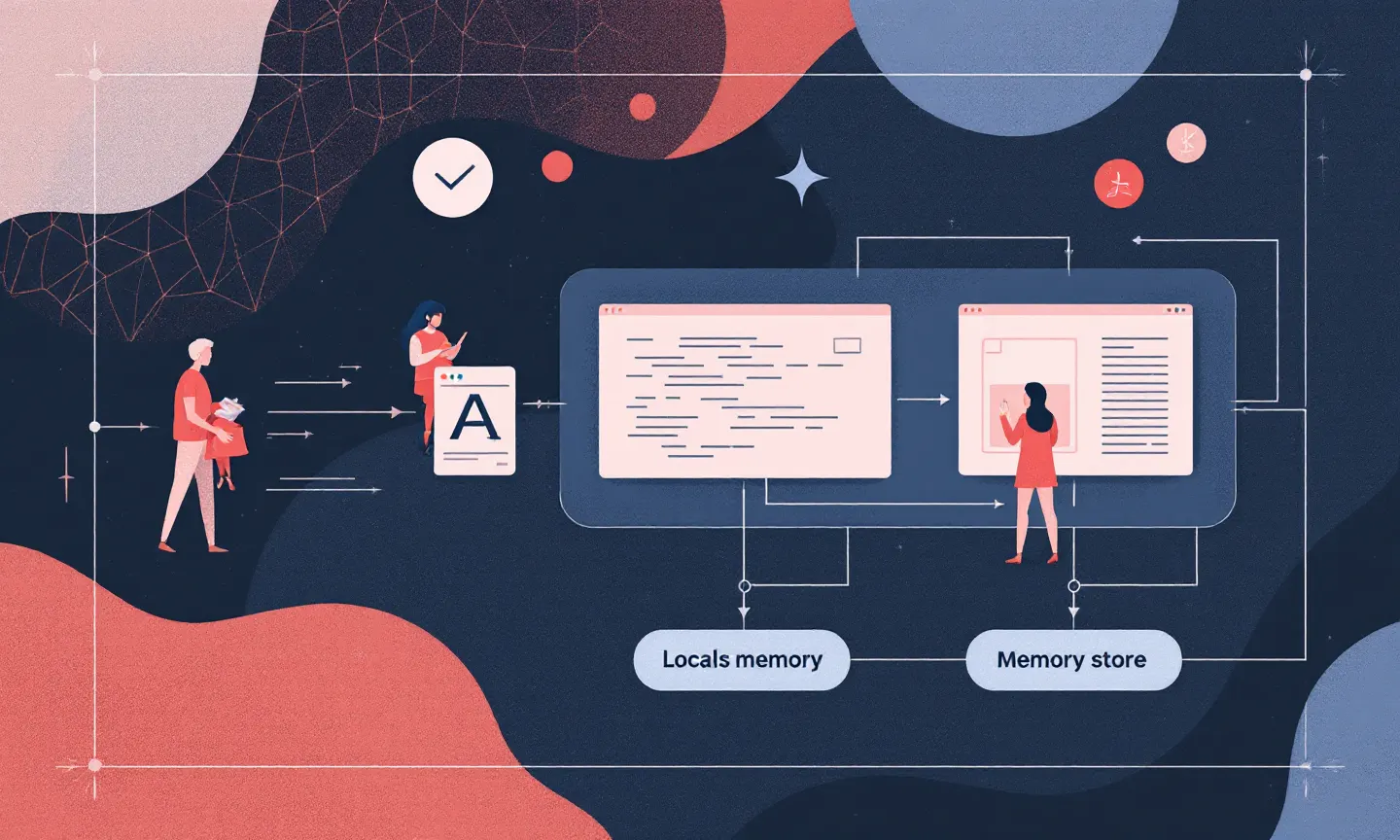
Architecture is straightforward from an API perspective. As an observer, not a proxy, the daemon doesn't sit between your agent and the model. Reading context from tool interactions, it writes structured memory entries that can be queried later. That matters because it means the memory layer doesn't add inference latency to your critical path.
Where things get interesting is the query path. When your agent needs to recall a decision, something has to fetch from the memory store, rank results, and inject them into the prompt context. Building this yourself means that's a retrieval pipeline you own end to end. Using Eidetic Works Pro means working with their retrieval interface and their ranking logic.
The API Contract You're Signing Up For
Here's where my skepticism kicks in. Any external memory service gives you an abstraction over the actual data flow, and abstractions hide costs. With Eidetic Works Pro, the schema of what gets stored isn't under your control. Neither is the embedding model used for semantic retrieval. Nor do you control the ranking algorithm that decides which memories surface in a given context.
Some teams find that fine. Agents that are coding assistants with memory like "we decided to use Postgres not MongoDB" have a low retrieval quality bar. Exact keyword match would probably work. Building agents that need to recall nuanced operational decisions, API contracts from third parties, or multi-step reasoning chains changes the equation. Ranking logic starts to matter a lot. Trusting someone else's heuristic to surface the right context at the right time is the trade.
Local-first architecture does address the obvious privacy concern. Code, decisions, and context never leave your machine. That's a meaningful advantage for teams in regulated industries or those with strict IP governance. Evaluating AI consulting engagements becomes simpler too, because the local-first model removes a whole category of data residency questions that would otherwise slow you down.
Local-first also means you're responsible for the daemon's uptime. When the daemon crashes, memory capture stops silently. There's no managed service SLA backing you up. Monitoring on the daemon process itself becomes necessary, and so does handling the case where the memory store gets corrupted or out of sync. These are ops problems you'd normally pay a service to absorb.
Building Your Own Memory Layer
Let's walk through what the build path looks like, because the cost comparison only makes sense if you understand what you're avoiding.
A minimal persistent memory system for agents needs three components. A capture mechanism that extracts decisions and context from agent interactions. A storage layer that persists structured memory entries with metadata for retrieval. A retrieval pipeline that ranks and injects relevant memories into the agent's prompt context.
Here's how the pipeline flows:
flowchart TD
  A[Agent Interaction] --> B[Capture Layer]
  B --> C[Memory Store]
  C --> D[Retrieval Pipeline]
  D --> E[Context Injection]
  E --> A
Capture is the hardest part to get right. Identifying what's worth remembering means parsing agent interactions, extracting decisions, and discarding noise. Their team has invested in this specifically for coding workflows. They've tuned their capture logic around code changes, architectural decisions, and debugging sessions. Source: dev.to
Building this yourself means expecting to spend significant engineering time on capture quality. We've seen teams underestimate this by an order of magnitude. Storage and retrieval layers are comparatively well-understood problems. A vector store plus an embedding model gets you most of the way there. Remaining work, which is deciding what to store and how to rank it, is where the real effort lives.
Teams building custom models or on-device AI systems may already have the storage and retrieval pieces in their stack. Running Qwen3 or Phi-3 locally with an existing vector store makes adding a memory layer an extension, not a new system. Capture logic is the only genuinely novel piece you'd need to write.
Where the Buy Decision Wins
Buying makes sense when three conditions are met.
Agents are primarily coding assistants working across multiple surfaces. Capture logic for coding workflows is hard to replicate, and Eidetic has done that work. Operating in a single IDE weakens the multi-surface value proposition considerably.
Teams without dedicated infrastructure engineers for agent memory fit the buy profile. Building a memory layer that's reliable, observable, and doesn't degrade agent performance requires ongoing engineering investment. When that's not a core competency you're building, buying makes sense. Time spent on capture logic and retrieval tuning is time you could spend on your actual product.
Data governance requirements allow local-first storage. Here, Eidetic Works Pro has a genuine architectural advantage. Local daemon model means no data leaves the machine, which simplifies compliance enormously. Building AI agents for clients in the EU or UK means this removes a category of legal review that would otherwise add weeks to your timeline.

Where Building Your Own Wins
Build when your agents aren't coding assistants. Their product is tuned for coding workflows. Building voice AI systems like our RunHotel product, or customer support agents, or workflow automation means the capture logic won't transfer. You'd be paying for infrastructure that doesn't fit your use case.
Build when you need fine-grained control over the retrieval pipeline. Agents that need to recall decisions with specific temporal weighting, entity relationships, or causal chains need you to own the ranking logic. An external service's ranking algorithm is a black box, and debugging retrieval quality through someone else's abstraction is painful. Debugging means reading documentation instead of reading code.
Build when memory is a core product feature, not infrastructure. Agents whose value proposition depends on memory quality can't outsource the thing that makes the product work. Same logic we apply to any build-vs-buy decision: don't buy the layer that differentiates your product.
The Latency Question
Memory retrieval adds latency to your agent's response path. How much, and whether it's on the critical path, is what matters.
Observer architecture in Eidetic Works Pro means capture happens asynchronously. Agent inference latency isn't affected by memory writes. Retrieval, though, is synchronous. When your agent needs to recall context, the memory store has to respond before the agent can generate its response.
Local retrieval is fast. We're talking tens of milliseconds for a local vector store query on a modern machine. Bottlenecks aren't the query itself, they're the context injection. More memories in the prompt means more tokens, which means slower inference and higher cost if you're using API-based models. This compounds quickly: inject five memories at two hundred tokens each and you've added a thousand tokens to every query where retrieval fires.
Hidden costs exist in any memory system, build or buy. Better retrieval means more relevant context, but more context means longer prompts. Tuning the retrieval pipeline to return only what's necessary, not everything that's relevant, is essential. Parameters like this should be under your control regardless of which path you choose.
Integration Patterns
Deciding to integrate Eidetic Works Pro means a lightweight integration because of the observer architecture. No need to modify your agent's inference pipeline. Daemon watches and writes independently.
Teams building on top of Eidetic's memory store use the retrieval API as the integration point. Agents query the store before generating a response, inject the results into the prompt, and proceed normally. Contracts are simple: query in, ranked memories out. Complexity is hidden inside the service, which is either a relief or a risk depending on your perspective.
Building your own means a more involved integration but gives you full control. Defining the memory schema, the embedding model, the ranking algorithm, and the injection strategy is all on you. Every parameter is yours to tune. Costs are engineering time, not just initial build but ongoing maintenance.
Production systems should start with a thin memory layer and measure its impact before investing in sophisticated retrieval. A simple key-value store with timestamp metadata covers most use cases. Add semantic retrieval only when keyword matching fails to surface relevant context. Use our AI cost estimator to model the token cost impact of memory injection before you commit to a retrieval strategy.
Making the Call
Decisions come down to whether memory is infrastructure or product in your system. Infrastructure means buy it. Product means build it.
Eidetic Works Pro fits the infrastructure case well for coding agents. Local-first architecture, multi-surface support, and tuned capture logic for coding workflows make it a reasonable integration choice. Trade-offs mean giving up control over the retrieval pipeline and the memory schema. Source: dev.to
Teams building agents where memory quality is the product should take the build path. More engineering time gets spent, but ownership of the layer that differentiates your agent from every other agent using the same memory service is the payoff.
Start this week by listing the ten most important things your agent needs to remember, then check whether Eidetic Works Pro's capture logic handles them. When it does, wire in the daemon. When it doesn't, you've already written the spec for your own memory layer.