

Why Cloudflare’s AI Agent Stack Scales Better Than Most
Hitesh Sondhi · July 16, 2026 · 12 min read
Most internal AI agent projects don’t fail because the model is bad. They fail because the plumbing is a crime scene.
We’ve seen the pattern too many times: somebody wires an LLM to Slack, bolts on a vector database, points it at five disconnected systems, and calls it “an internal copilot.” Two weeks later, it’s confidently quoting stale docs, leaking access across teams, and timing out during the Monday morning rush. Fancy demo. Terrible system.
That’s why Cloudflare’s internal stack is interesting.
Their write-up on a unified data platform isn’t just another “look, we use AI too” post. It shows the boring stuff that actually matters: one place to govern data, predictable access patterns, and infrastructure that doesn’t fall apart the second more than twelve employees ask the same question at once. If you care about internal AI agents that survive contact with reality, this is the stuff to study. Source: Cloudflare Blog
Key Takeaways
- Internal AI agents scale when data access is unified, not when prompts get longer.
- Governance isn’t bureaucracy; it’s what stops your “helpful assistant” from becoming a compliance incident.
- Retrieval quality beats model size more often than people want to admit.
- Reliability for agent systems comes from boring platform work: caching, permissions, observability, and fallback paths.
- If you’re asking “how we built cloudflare's” internal AI foundation, the real answer is: they built the data layer first, not the chatbot skin.
The part most teams get backwards
A lot of teams start with the assistant.
Bad move.
They obsess over model choice, agent frameworks, tool calling, and whether the bot should have a cute name. Meanwhile, the actual enterprise data is scattered across warehouses, tickets, docs, dashboards, and APIs with wildly different permission models. That’s like hiring a brilliant librarian, then storing every book in a different city and labeling half the shelves “misc.”
Cloudflare’s unified data platform approach gets the order right. They focused on consolidating how data is stored, queried, and governed across internal use cases, which creates a sane foundation for analytics and AI systems alike. Source: Cloudflare Blog
That sounds less glamorous than “autonomous multi-agent orchestration.”
It’s also the reason the system has a chance of working.
Here’s the mental model we use: internal AI agents are not magic employees. They’re interface layers over your operational memory. If that memory is fragmented, stale, or permissionless, your agent will be fragmented, stale, and dangerous.
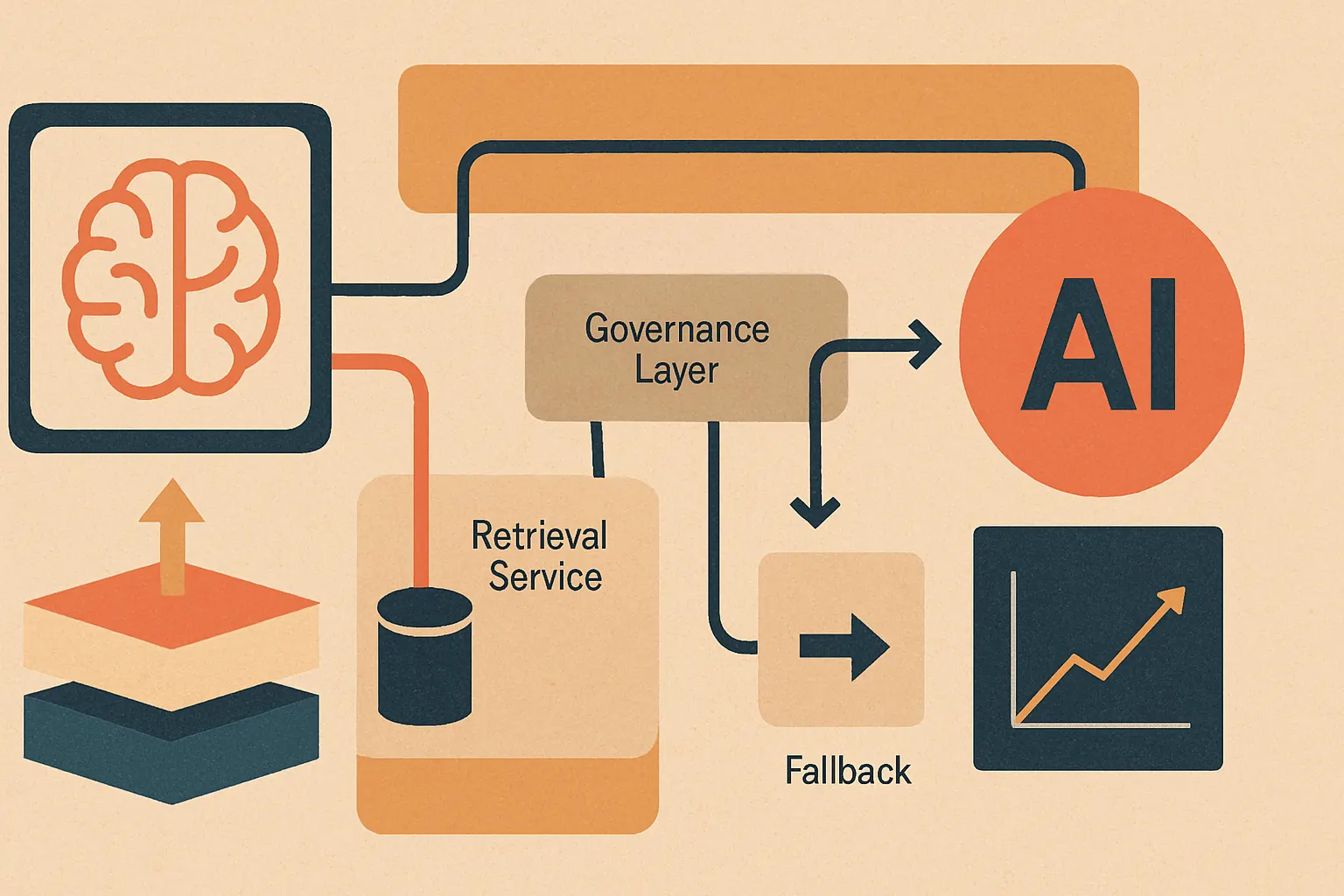
Before we get into the architecture, here’s the picture in plain English.
Why unified data beats “connect everything to the LLM”
The naive architecture is simple: connect the model to Jira, Confluence, GitHub, CRM, docs, and warehouse tools directly. It looks flexible. It’s actually a maintenance tax with a hallucination problem attached.
Every connector has its own schema, auth model, update cadence, and failure mode. One source returns stale data for ten minutes. Another rate-limits. A third has user-level ACLs nobody mapped correctly. Now your agent has to reason across mismatched truth sources in real time.
That’s not an AI problem. That’s a systems design problem.
Cloudflare’s unified platform matters because it reduces this entropy. A common data layer gives you standardized ingestion, consistent metadata, and a place to enforce policy once instead of seventeen times. Source: Cloudflare Blog
And yes, this is where some teams get annoyed because they wanted a faster path.
We’ve taken the “just wire the tools directly” shortcut before in internal AI prototypes. It’s fun for a sprint. Then someone asks why the assistant answered with a decommissioned runbook from last quarter, and suddenly everyone is pretending retrieval quality was always a top priority.
Retrieval quality is the whole ballgame
Hot take: most internal agent teams don’t have a model problem. They have a retrieval problem wearing a model-shaped hat.
If your internal agent pulls the wrong chunk, stale chunk, or unauthorized chunk, the fanciest frontier model in the world won’t save you. It’ll just produce a more fluent wrong answer.
A unified data platform helps because retrieval gets better when your data has:
- consistent metadata
- clear ownership
- freshness signals
- access controls
- normalized schemas
- lineage you can inspect
That’s the unsexy foundation behind useful answers.
We’ve found that internal agents get dramatically more trustworthy when retrieval is opinionated. Not “search everything and hope.” More like: rank by source authority, freshness, team ownership, and document type; suppress low-confidence sources; and force citation paths for high-stakes queries.
Because not all internal data deserves equal trust.
Your production runbook should outrank a random chat thread. A policy page updated yesterday should outrank a copied Notion note from six months ago. An incident postmortem should be tagged as historical context, not live operating truth.
That’s where a lot of “enterprise AI” products quietly fall apart. They treat retrieval like a vending machine. Put in embedding, get out context.
Nope.
Retrieval for internal agents is closer to evidence handling. Chain of custody matters.
Governance is the feature, not the tax
This is the part people love to skip because it sounds like committee work.
Then legal shows up.
Cloudflare’s emphasis on a unified data platform matters because governance becomes enforceable when the platform is central, not scattered across custom integrations. You can apply consistent controls over who can access what, how data is classified, and what gets exposed to downstream systems. Source: Cloudflare Blog
For internal AI agents, governance has three jobs:
1. Stop data leakage across roles
If the finance team asks a compensation question, the answer shouldn’t be retrievable by a product manager who asks a vaguely similar prompt. Sounds obvious. You’d be surprised how many early agent stacks basically trust the retrieval layer to “do the right thing.”
That’s bad.
Permissions should be enforced before retrieval, during retrieval, and again before response assembly. Defense in depth isn’t overkill when the thing generating answers sounds confident by default.
2. Define source trust
Some systems are authoritative. Some are advisory. Some are junk drawers with a login page.
Your agent stack should know the difference.
We usually recommend explicit source tiers: system-of-record, operational docs, collaboration content, and low-trust conversational artifacts. If everything is treated equally, your agent will eventually answer a policy question using somebody’s half-baked brainstorm from a meeting note.
Comedy for the demo. Disaster in production.
3. Make data lifecycle visible
If nobody knows when a source was updated, who owns it, or whether it’s deprecated, your retrieval stack is basically dumpster diving with embeddings.
Governance isn’t just about blocking access. It’s about preserving meaning over time.
Here’s a simple way to think about the flow.
flowchart TD
    A[Internal Data Sources] --> B[Unified Data Platform]
    B --> C[Metadata and Governance Layer]
    C --> D[Permission-Aware Retrieval]
    D --> E[AI Agent Orchestrator]
    E --> F[Response with Citations and Guardrails]
    E --> G[Observability and Audit Logs]
That diagram is boring on purpose.
Boring systems survive.
Operational reliability is where agent dreams go to die
Here’s where it gets weird: a lot of internal AI stacks are designed like demos but deployed like infrastructure.
Those are not the same thing.
Once an internal agent becomes useful, usage spikes in ugly patterns. Monday mornings. Incident windows. Executive all-hands prep. Product launch week. Everybody asks the same class of questions at once, and suddenly your retrieval service is thrashing, your embeddings index is cold, and your model endpoint is acting like it just saw a ghost.
Cloudflare’s platform thinking is valuable because reliability starts below the agent layer. Unified storage, query paths, and internal platform consistency give you a better shot at predictable behavior under load. Source: Cloudflare Blog
In practice, reliable internal agents need at least four things:
Caching that isn’t dumb
Not every query needs fresh retrieval from scratch. Some need semantic caching, some need result-set caching, and some need strict freshness because they touch incidents, pricing, or policy.
Treating all prompts the same is lazy engineering.
Fallback paths
When retrieval fails, the system shouldn’t improvise from weak memory like a student who didn’t read the book. It should say it lacks confidence, narrow the scope, or route the user to a trusted source.
A graceful “I can’t verify that” is better than a polished lie.
Observability at the source and answer level
If you can’t trace which documents were retrieved, filtered, reranked, and cited, you don’t have an enterprise agent. You have a slot machine with logs.
We care a lot about answer provenance in AI systems because debugging output without retrieval traces is like diagnosing food poisoning by staring at the menu.
SLOs for agent subsystems
Not just model latency. Retrieval latency. permission-check latency. source freshness lag. citation coverage. refusal rates for high-risk queries.
If your only metric is “users chatted with it,” congratulations, you’ve built a toy.
Why this architecture works better for internal agents than generic RAG stacks
Generic RAG tutorials are fine for prototypes. They’re awful as architecture advice.
Most of them assume:
- one corpus
- one permission model
- one embedding strategy
- one retrieval path
- one answering mode
Real internal environments have none of that.
Cloudflare’s unified platform approach is stronger because it treats internal data as a platform concern, not an app-level convenience. That’s the difference between a one-off chatbot and a reusable foundation for many agents. Source: Cloudflare Blog
That distinction matters if you want multiple internal use cases:
- engineering support bots
- sales enablement assistants
- incident copilots
- policy Q&A tools
- analytics agents
- workflow automation
If every new agent has to reinvent ingestion, ACL mapping, freshness handling, and source ranking, your velocity will collapse under your own cleverness.
We’ve seen this firsthand in AI delivery work: teams think they’re shipping agents, but they’re really building the same data middleware five times with different logos on top. If you’re investing seriously in AI agents, this is the layer to get right first.
The hidden win: platform teams stop being the bottleneck
This is the part I like most.
A unified internal data foundation doesn’t just help the AI team. It reduces the amount of bespoke glue code every product or ops team has to maintain. That means fewer snowflake integrations, fewer secret permission hacks, and fewer “only Raj knows how this sync works” situations.
That’s how systems scale organizationally, not just technically.
And if you’re building agents for environments with stricter privacy or latency constraints, the same principles carry over to on-device AI and voice AI systems too. Different runtime, same lesson: garbage context and weak governance will ruin your day faster than model choice.
For teams exploring specialized behavior, custom models can help, but only after the data and retrieval layers stop fighting you.
Model tuning on top of bad retrieval is like seasoning rotten meat.
Bold opinion, but we stand by it.
If you want to copy the good parts, start here
Don’t start by asking which agent framework to use.
Start with these questions:
What are your authoritative sources?
Name them. Rank them. Assign owners. If nobody owns a source, don’t let the agent rely on it for high-stakes answers.
How are permissions enforced?
If your answer is “the source system handles that,” keep digging. You need end-to-end permission-aware retrieval, not vibes.
How do you measure retrieval quality?
Not just click-through. Measure citation usefulness, source authority hit rate, stale-answer rate, and escalation frequency.
What happens when the system is unsure?
If the answer is “it still answers,” fix that before rollout.
Can multiple agents share the same foundation?
If not, you’re building demos, not a platform.
This is also where cost sneaks up on people. Repeated retrieval, oversized context windows, and unnecessary model calls can turn an internal assistant into a very expensive bad employee. If you’re planning a rollout, run the numbers early with something like our AI cost estimator.
Because surprise AI bills are a terrible way to learn systems design.
So, how we built cloudflare's isn’t really the lesson
The phrase “how we built cloudflare's” gets attention because people want the secret sauce.
Fair enough.
But the real lesson from Cloudflare’s internal architecture isn’t a trick. It’s discipline. They appear to be solving the right layer of the problem: unify data, standardize access, enforce governance, and make downstream systems more reliable. That’s what gives internal AI agents a chance to scale beyond novelty. Source: Cloudflare Blog
And that’s the part most teams want to skip because it’s not flashy enough for a launch post.
Their mistake.
If you’re building internal AI systems right now, steal this pattern shamelessly. Build the data platform first. Make retrieval permission-aware. Treat governance like product quality, not legal overhead. Instrument everything. Then add the agent layer on top.
That order feels slower.
It’s usually faster by month three.
If you want help designing an internal AI stack that won’t embarrass you in front of your own employees, our team does exactly that through AI consulting. And if you’re curious how these platform decisions show up in real products, RunHotel is a good example of what happens when you take reliability and deployment constraints seriously from day one.
Or just contact us, and we’ll happily tell you which parts of your current agent plan are going to explode.
Politely, of course.